
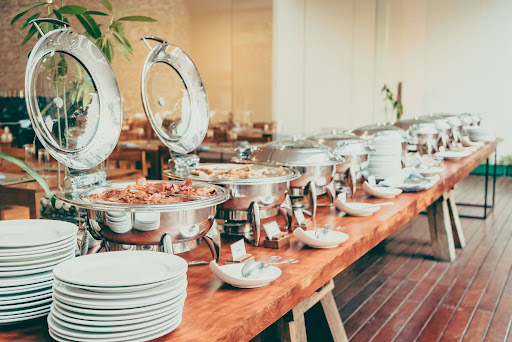



To select a wedding caterer, evaluate their event experience, menu flexibility, staffing ratios, food safety practices, pricing transparency, venue familiarity, and contract terms. Always schedule a tasting and confirm logistics in writing before signing.
What Does a Wedding Caterer Do?
A wedding caterer manages everything related to food at your reception: menu planning, food preparation, service staff, equipment, setup, and breakdown. The best ones also coordinate with your venue, handle dietary accommodations, and act as a logistics partner on the day itself.
Understanding this scope matters because many couples shop for a caterer as if they are ordering food delivery. In reality, you are hiring a team that will operate on-site for six to ten hours, manage dozens of moving parts, and directly shape how your guests feel about the event.
Factors Couples Most Commonly Overlook

Price and menu tend to get all the attention. These factors get far less and they are the ones most likely to cause problems:
| Factor | Why it matters |
|---|---|
| Staffing ratio | One server per 10–15 guests is the standard for plated service. Below that, food arrives cold and guests wait. |
| Service style logistics | Buffet, plated, family style, and food stations each require different staffing, equipment, and timing. |
| Equipment scope | Confirm what is included: chafing dishes, linens, bar setup, tableware, serving stations. Gaps become surprise costs. |
| Liability insurance | Your venue will require it. A caterer without coverage puts your deposit at risk. |
| Contingency planning | Ask specifically what happens if a lead chef cancels or a supplier fails day-of. Experienced caterers have written backup plans. |
How to Evaluate a Caterer’s Track Record
What past events tell you
Request a portfolio of events similar to yours in scale, venue type, and cuisine style. Look for consistency across different guest counts. A caterer who handles 40-person dinners elegantly may struggle at 200 without the right infrastructure.
Pay attention to cultural and regional cuisine authenticity if that matters to your menu. Ask whether the chef has direct experience with those cuisines or sources from specialists.
Where to read reviews
Go beyond Google and Yelp. The most useful signals come from:
- The Knot and WeddingWire (structured reviews with event-specific details)
- Local wedding Facebook groups and Reddit communities (candid, unfiltered feedback)
- Direct references from the caterer call at least two, not just email
When speaking with references, ask specifically about timing, staff professionalism, and how the caterer handled anything that went wrong.
What Questions Should You Ask a Wedding Caterer?
Use this checklist to compare potential caterers before signing a contract. You can also explore Royal Flamingo Catering’s wedding catering services to learn more about menu planning, staffing, setup, dietary accommodations, and reception service options.
- What is included in your per-person price, and what is billed separately?
- How many staff will be on-site, and what is the server-to-guest ratio?
- Do you carry general liability and liquor liability insurance?
- Have you worked at our venue before? If not, will you do a site visit?
- Who is the lead coordinator on the day, and will they be present throughout?
- What is your contingency plan for staffing emergencies?
- How do you handle last-minute changes to the guest count?
- What is your cancellation and refund policy?
Wedding Menu Planning

Balancing guest preferences with creative choices
A strong wedding menu reflects your preferences while remaining accessible to guests with varying tastes and dietary needs. Seasonal menus using local ingredients tend to perform best they are fresher, more cost-efficient, and more memorable than generic banquet standards.
Build the menu around these considerations:
Course timing: For plated service, confirm the interval between courses. Gaps over 25 minutes break the reception flow.
Dietary range: Confirm gluten-free, vegan, and vegetarian options are genuine dishes, not afterthoughts. Ask what percentage of past events required allergen-safe alternatives a caterer with real experience will have a clear answer.
Portion sizing: Buffet service typically requires 20–30% more food than plated. Factor this into your per-person budget comparison.
Service style comparison
| Style | Best for | Consideration |
|---|---|---|
| Plated (formal) | Seated receptions, formal venues | Higher staffing cost; tighter timing required |
| Buffet | Larger guest counts, relaxed atmosphere | More food volume needed; queuing management matters |
| Family style | Intimate weddings, communal feel | Table space requirements are significant |
| Food stations | Cocktail receptions, interactive experiences | Staff per station adds up quickly |
What to evaluate at a tasting
A tasting is not just about whether the food tastes good. Use it to assess:
Staff communication: How does the team interact? Are they attentive without being intrusive?
Temperature: Is hot food served hot? Is cold food cold? This reveals kitchen logistics.
Presentation: Does plating hold up at scale, or does it only work for individual portions?
Behind-the-Scenes Operations
Staffing and service professionalism
The serving team is as important as the food. A polished team makes a $80-per-head menu feel like a premium experience. An under-trained team undermines even exceptional food.
Ask for specifics: How are servers recruited and trained? Do they have experience at weddings specifically, or mainly corporate events? Wedding service requires a different pace and sensitivity.
Equipment, setup, and breakdown
Get a written list of everything included in your package. Common gaps that become costly surprises:
- Cake cutting fee (often $2–$5 per guest, billed separately)
- Linen rental (may be a separate vendor)
- Bar setup and glassware
- Serving station furniture
- Breakdown and waste removal after the event
Venue Compatibility
Your caterer and venue need to work together smoothly. Confirm:
- Kitchen facilities: Does the venue have a full prep kitchen, or does the caterer need to bring mobile equipment? This affects both cost and food quality.
- Alcohol licensing: Some venues require you to use their bar service. Others allow outside caterers to serve alcohol with the appropriate permit.
- Load-in access: Where do vendors arrive? Is there a freight elevator or loading dock? A caterer unfamiliar with your venue’s logistics may arrive late or disrupt the event timeline.
- Preferred vendor lists: Some venues have exclusive or preferred caterer lists. Working outside that list may require additional approval or insurance documentation.
A caterer who has worked at your venue before is a meaningful advantage. They know the kitchen layout, loading procedures, and venue staff — all of which reduce day-of friction.
Contracts, Pricing, and What to Confirm in Writing
Understanding the cost structure
Wedding catering in the US typically ranges from $40–$150 per guest for food service, depending on the region, service style, and menu complexity. This figure usually excludes:
- Bar service and alcohol
- Staffing overtime
- Rentals not specified in the contract
- Gratuity (15–20% of the total is standard)
- Travel fees for destination venues
What your contract must include
Before signing, verify the contract specifies:
- Emergency contact and contingency clause
- Final guest count deadline and per-head price adjustments
- Exact menu items (not general descriptions)
- Number of staff, hours covered, and overtime rate
- Complete equipment and rental list
- Payment schedule and cancellation terms
- Insurance certificate details
Food Safety and Dietary Accommodations
Safety standards to verify
Ask about the caterer’s commissary setup. Specifically:
- Are food handlers certified? (ServSafe or equivalent)
- Are allergen-sensitive meals prepared in a separate area?
- What are the hot and cold holding procedures for off-site events?
Cross-contamination is a genuine risk at large events. A professional caterer should be able to describe their allergy protocol clearly and without hesitation.
Managing complex dietary needs
Confirm the caterer can accommodate your specific requirements. Common needs include gluten intolerance, nut allergies, vegan and vegetarian preferences, halal or kosher requirements, and low-sodium or diabetic-friendly options.
Ask how they communicate dietary accommodations to serving staff on the day. Verbal communication breaks down at scale the best caterers use place card systems or colour-coded dish identifiers.
Sustainability Practices
More couples are making sustainability part of their catering brief. Questions worth asking:
- Do you source from local or seasonal suppliers?
- How do you handle food waste after the event? (Donation partnerships and composting programs exist in most cities.)
- Do you use single-use plastics for service items?
This is increasingly a vendor differentiator, and the answers reveal how thoughtfully a caterer runs their operation overall.
Ready to start planning? Explore our wedding catering services and request a personalized quote based on your guest count, venue, menu preferences, and preferred service style.
Every wedding is different. Share your guest count, venue, and menu preferences and we will put together a detailed quote including service style options, staffing, and what is included in your package.
Serving Sarasota, Tampa, Bradenton, and surrounding areas.
FAQs about Catering Company Selection
How early should I book a wedding caterer?
Book 9–12 months in advance. Quality caterers in popular wedding markets often fill their peak season dates (May–June and September–October) more than a year out. If your wedding falls on a holiday weekend, start even earlier.
How much does wedding catering cost per person?
Food service typically runs $40–$150 per guest depending on your region, menu, and service style. Add 20–35% for bar service, staffing, and rentals. Always request a fully itemised quote — per-person figures alone hide significant costs.
Can a caterer handle multiple dietary restrictions?
Yes, provided they have the right setup. Ask directly about their allergen protocol, separate prep procedures, and how they communicate dietary needs to serving staff on the day. A caterer with real experience will give you a specific, practical answer.
Should I schedule a tasting before signing?
Yes. Reputable caterers offer tastings, sometimes at a fee that is credited toward your booking. Use the tasting to evaluate food quality, presentation, temperature management, and the team’s communication — not just flavour.
What happens if something goes wrong on the day?
Ask this question directly during your vetting process. Experienced caterers have written contingency plans covering staffing emergencies, equipment failures, and supplier issues. If a caterer cannot answer this question clearly, that is a signal.
What is a staffing ratio for wedding catering?
For plated service, one server per 10–15 guests is the professional standard. For buffet service, one per 25–30 guests is typical. Food stations require dedicated staff per station regardless of guest count.