
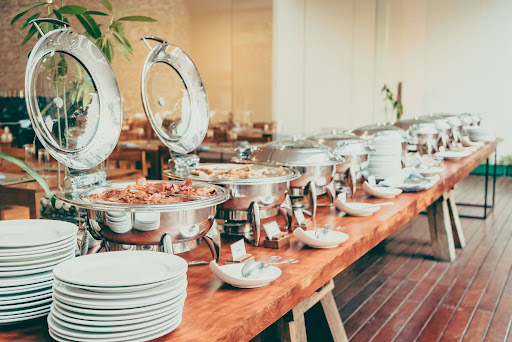



Planning an unforgettable event, whether it’s a wedding catering, corporate gathering, or milestone celebration, often hinges on one key element: the food. Décor, music, and speeches may fade from memory, but the meal is what guests are most likely to remember. That’s why catering typically represents the largest share of an event budget. The real challenge, however, is finding the right balance between quality and cost.
At first, event catering costs can feel overwhelming, with countless options, services, and pricing models to sort through. Reviewing available catering menu and package options can help you compare service styles, menu choices, and potential costs before setting your budget. The good news is that with a thoughtful approach, you can create a dining experience that delights your guests while staying within budget.
This guide breaks down everything you need to know about the cost for catering an event, the key factors that influence pricing, and insider strategies to keep expenses under control, all while ensuring your event is memorable for all the right reasons.
Why Understanding Event Catering Cost Matters
Food and beverage often account for 30–40% of an event budget, making it one of the most significant expenses you’ll need to manage carefully. By understanding what drives catering prices, you gain the power to make smarter decisions that align with your guest count, event style, and overall event goals.
Think of it this way: understanding the average cost for catering an event isn’t just about cutting costs, it’s about maximizing value. When you know where to invest and where to scale back, you ensure your catering dollars work harder for you. This balance allows you to create a memorable dining experience for your guests while keeping your event budget under control and stress-free.
Event Type Matters: Tailoring Catering Costs
- Weddings
Expect to spend on the higher end of the spectrum, as weddings typically include cocktail hours, multi-course meals, dessert stations, and full bar service. With added touches like late-night snacks or custom menus, the wedding catering cost tends to be higher, but it reflects the level of detail and experience expected on such a milestone day.
- Corporate Events

Here, efficiency often trumps extravagance. Buffet-style meals, boxed lunches, or light hors d’oeuvres can help keep corporate catering Sarasota costs down while still delivering a polished, professional impression. Convenience and timeliness are key.
- Social Gatherings
Birthdays, anniversaries, and private parties can be far more flexible. Food trucks, casual buffet spreads, or hybrid catering options can keep costs reasonable while maintaining a relaxed, enjoyable atmosphere.
The Average Cost for Catering an Event in 2026
Let’s start with the question every planner asks: how much does catering cost for an event in 2026?
On average, catering prices range between $30 and $150 per person, depending on the type of service, menu complexity, and location. For example:
- Buffet Service: $30–$50 per guest
- Plated Dinner: $50–$100 per guest
- Full-Service Catering with Staff & Rentals: $100–$150+ per guest
Pricing can vary based on your selections, so review our full-service catering menu to explore available dishes and service options.
The average cost of full-service event catering for weddings in 2026 is around $85 per person. Still, this figure can climb higher if you’re opting for premium menus, open bars, or additional staffing needs.
Factors That Influence Event Catering Cost
Not all events are created equal, and neither are catering bills. Understanding the biggest factors that influence your bottom line will help you plan more effectively and avoid unexpected costs.
1. Guest Count
Your guest list is the single biggest driver of catering expenses. More guests naturally mean a higher overall bill. However, caterers often reduce the cost per person when serving larger groups due to economies of scale. Still, every additional plate adds up, so finalizing your headcount early can save money.
2. Service Style
How the food is served makes a big difference. Buffets are usually the most cost-effective because fewer servers are needed. Plated dinners bring sophistication and elegance but require more staff to ensure smooth service. Family-style dining offers a nice middle ground, combining efficiency with a warm, communal feel.
3. Menu Complexity
The ingredients you choose directly impact your event catering cost. A straightforward menu featuring seasonal and locally sourced foods will be less expensive. On the other hand, dishes that rely on premium seafood, imported items, or custom creations can raise costs quickly.
4. Beverages & Bar Service
Alcohol service is often the hidden budget-buster. An open bar can nearly double catering expenses. Offering a limited beer-and-wine selection or a signature cocktail is a smart way to keep costs under control while still impressing guests.

5. Rentals & Staffing
Items like tables, chairs, linens, and servers are often included in full-service packages. The more comprehensive the service, the higher the cost.
6. Location & Season
Your location and the time of year matter. Prices tend to be higher in metropolitan areas, and peak seasons, like weddings in summer or holidays, often come with surcharges. Because every event has different requirements, the best way to understand your actual costs is to request a custom catering quote based on your date, location, guest count, menu, and service needs.
Ways to Control Event Catering Costs Without Sacrificing Quality
If you’re concerned about overspending, don’t worry, there are plenty of strategies to manage your budget without compromising guest satisfaction.
- Be Clear on Priorities
Decide early: is gourmet dining the highlight of your event, or is food a supporting element? For weddings, the meal might be a centerpiece; for corporate meetings, efficiency may matter more.
- Choose Seasonal & Local Ingredients
Seasonal produce and locally sourced proteins often reduce costs while delivering fresher, better-tasting meals.
- Simplify the Menu
Offer fewer entrée choices to cut costs. A streamlined menu reduces prep time, food waste, and staffing requirements.
- Control Beverage Options
Instead of an open bar, consider offering a curated cocktail, beer, and wine list. You’ll still impress guests without inflating your bar tab.
- Ask About Packages
Many caterers offer bundled packages, where food, rentals, and staffing are included at a lower rate than sourcing them separately.
- Avoid Peak Days
Saturdays in June or December are prime booking times, and they cost more. Consider a Friday evening, Sunday afternoon, or off-season date for lower catering rates.
Hidden Costs You Shouldn’t Overlook
When budgeting for the cost of catering an event, it’s important to plan for additional charges that can easily sneak into the final bill if overlooked:
- Service Fees: These are typically 18–25% of the total bill and cover staffing and administration.
- Gratuities: Sometimes already included, sometimes added separately, always double-check.
- Corkage Fees: Common if you provide your own wine, champagne, or other alcohol.
- Delivery & Setup: Especially relevant for off-site venues where transportation and setup require extra staff time.
Accounting for these hidden costs upfront ensures your final catering bill stays within budget and avoids unwelcome surprises.
Pro Tips for Getting the Best Value
- Get Multiple Quotes: Always compare at least three caterers to understand the range of pricing and services available in your area.
- Ask for Tastings: Never commit without sampling the food first; taste and quality are just as important as cost.
- Negotiate: Many caterers are open to adjusting packages if you’re flexible with menu choices, service style, or timing.
- Leverage Referrals: Ask your venue or event planner about preferred caterers; these partnerships often come with discounts.
- Think Per Person, Not Total: Breaking costs down by guest ensures you’re evaluating true value, not just the overall bill.
Final Thoughts
Catering is never just about food; it’s about shaping the entire guest experience. By understanding what drives event catering cost, you can strike the right balance between quality and affordability. The key is to align your catering choices with the priorities of your event, whether that means creating a sense of indulgence, keeping things efficient, or blending both. With thoughtful planning, clear communication, and a budget that reflects your goals, you can deliver an event that delights guests and leaves a lasting impression without stretching resources.
So the next time you wonder, “How much does catering cost for an event?” you’ll be equipped to answer with confidence and plan with purpose.
At Royal Flamingo Catering, we believe great events start with thoughtful planning and the right catering partner. Explore our catering menu and package options to find the right fit for your occasion, then request a custom catering quote based on your event date, guest count, location, and service needs.
FAQs
1. What’s the average event catering cost in 2026?
Between $30–$150 per guest, based on service style and menu.
2. How much does full-service catering cost?
The average cost of full-service event catering in 2026 is about $85 per guest.
3. Does event type affect catering costs?
Yes, weddings are pricier, while corporate events or casual parties can be more budget-friendly.
4. How does guest count impact cost?
More guests mean a higher total bill, but sometimes a lower cost per person.